
[email protected] +92 333 8625441
0%

Fine Point Cuticle Scissors serve a small task with little room for error. At a manicure table, the blades must reach narrow edges without pulling delicate cuticle skin. Buyers therefore look beyond a polished product photo. They compare tip alignment, blade action, handle balance, finish quality, and consistency between samples and bulk orders. Small differences matter.

The U.S. Bureau of Labor Statistics projects employment for manicurists and pedicurists to grow 7% from 2023 to 2033, faster than the average for all occupations. This workforce outlook does not measure scissors sales. It does, however, point to continued demand for professional nail-care services and dependable salon tools. A supplier’s claims should still be checked against physical samples and clear inspection records. Ask how the tips are aligned, how the blades are tested, and whether material specifications can be documented. A smooth cut is useful evidence, but not the whole story. Handle comfort matters too.

For buyers comparing China-based manufacturers, reliable communication and repeatable quality deserve as much attention as price. Request product dimensions, close-up images, packaging details, and sample approval procedures before placing a large order. Look for answers that are specific, not simply reassuring. Fine Point Cuticle Scissors are precision instruments, yet no supplier should promise perfect results without explaining its checks. That distinction is easy to miss. A careful sourcing decision begins with evidence, then leaves room for honest follow-up.
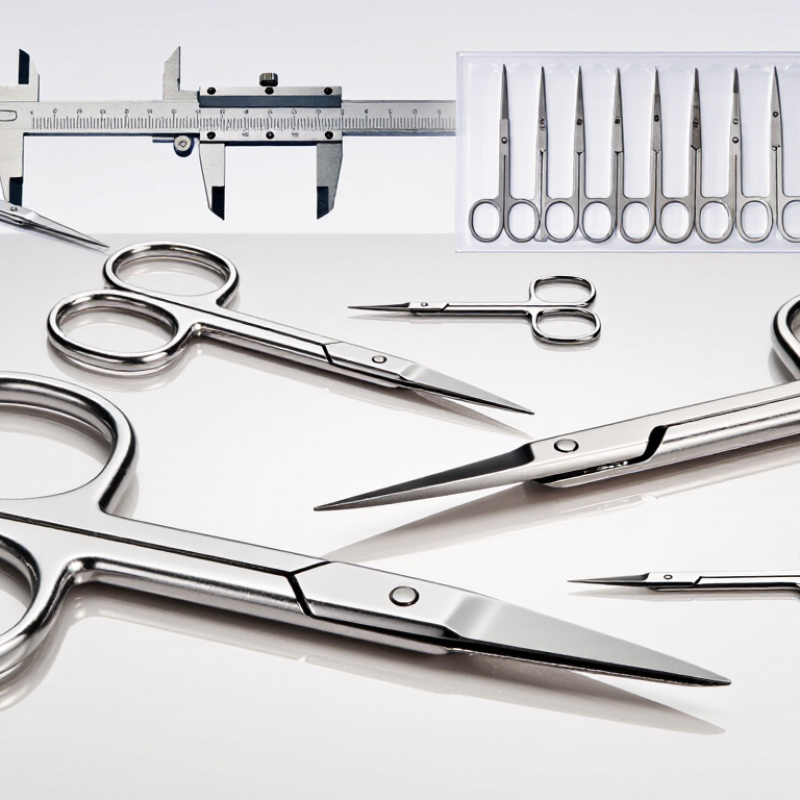
China Top Fine Point Cuticle Scissors Supplier

Fine-Point Cuticle Scissors: Blade Design, Tip Geometry, and Core Uses

Fine-point cuticle scissors rely on controlled geometry, not simply sharpness. Slim, tapered blades let a trained technician reach loose dead cuticle along the nail fold. A narrow tip improves visibility around curved edges, while a smooth pivot helps prevent sudden jumps. The tips should meet evenly; a visible gap can pull delicate skin instead of cutting cleanly. Thin points offer access, but they can bend if used to pry or cut thick material.

Blade curvature affects the working angle. A modest curve follows the natural nail contour and can reduce wrist twisting during detailed work. For suppliers, inspect tip alignment under magnification and test cutting on thin practice material. Grand View Research estimated the global nail care market at USD 21.9 billion in 2022, illustrating the scale of demand for precise nail-care tools; the figure covers the wider category, not scissors alone. Small distinctions matter.

Tips: Keep the blades dry and clean, and store them with the points protected. Cut only loose, dead tissue; avoid trimming attached living skin. Check the joint regularly. A slightly stiff hinge may feel safer, but it can also make fine control harder—worth reconsidering during sampling.

Fine-Point Cuticle Scissors: Blade Design, Tip Geometry, and Core Uses

The chart shows component counts for a typical two-ring scissor design: two blades meet at one pivot, forming two cutting edges and two pointed tips. Slim, finely tapered tips help with precise access around the nail fold; these scissors are intended for trimming loose cuticle tissue, not cutting the nail plate. Designs vary by model.

AISI 420 Steel: 12–14% Chromium Under ASTM A276

Fine-point cuticle scissors need a stable edge, but steel chemistry is only one part of the result. ASTM A276/A276M, the specification for stainless-steel bars and shapes, lists Type 420 chromium at 12.0–14.0%. This range offers a useful material check, not a guarantee of finished-tool quality. Chromium helps support corrosion resistance, while Type 420’s martensitic structure can be hardened by heat treatment. ASM Handbook, Volume 1, discusses the heat-treatable nature of martensitic stainless steels. Final hardness still depends on processing and section size. Small details matter.

For fine tips, consistent hardness and careful grinding help the blades meet without a visible gap. A supplier should connect each steel batch to a mill test certificate and check tip alignment, pivot play, and closing action. ASTM chemistry limits do not measure those assembly details. Ask for the heat-treatment range and hardness test method, rather than relying on “420 steel” alone. One caveat: corrosion resistance also depends on surface finish, cleaning, and exposure. The chromium range does not promise stain-free use. If a test record looks incomplete, it deserves a question before production, not an excuse after shipment.

China Supplier Evaluation: ISO 9001:2015 Quality Systems and Production Traceability

China Top Fine Point Cuticle Scissors Supplier
China Supplier Evaluation: ISO 9001:2015 Quality Systems and Production Traceability

When evaluating a China supplier of fine point cuticle scissors, look beyond product photos and quoted tolerances. Ask how the ISO 9001:2015 quality system is applied on the factory floor. For example, can staff show inspection criteria for pointed tips, pivot movement, and blade alignment? Useful evidence includes dated inspection records, equipment calibration logs, and documented handling of defects. Small details matter.

ISO 9001:2015 provides a framework for managing quality; certification alone does not prove every pair meets your requirements. Check that the certificate is current and covers the relevant manufacturing site and activities. Then compare written procedures with actual records. Do operators use the same inspection method from shift to shift? A tidy audit folder is not enough. I would treat it as one piece of evidence, not a guarantee.

Traceability should connect a finished batch to key production and inspection records. Request a sample lot record showing material identification, process dates, inspection results, and approval status. During a factory review, choose a batch and ask staff to retrieve its documents. A missing link is worth discussing. Records may be imperfect, but the supplier should explain gaps and show how corrective actions are tracked. That practical check can reveal more than a broad quality claim.

Factory Quality Checks: ISO 2859-1 Sampling and AQL 1.0/2.5 Benchmarks

China Top Fine Point Cuticle Scissors Supplier

A dependable factory checks more than appearance. For fine-point cuticle scissors, inspectors examine tip alignment, blade closure, pivot movement, and surface finish. A small gap near the tips can affect trimming precision. Each inspection plan should define the lot, inspection level, and acceptable quality limit before sampling begins.

ISO 2859-1 provides a sampling framework for lot-by-lot inspection. The sample size depends on the lot size and chosen inspection level. AQL 1.0 for major defects and 2.5 for minor defects are common benchmarks, not promises that every lot will be defect-free. The acceptance and rejection numbers come from the applicable sampling plan. Record findings by defect type; blurry definitions can make results inconsistent.

Tips: Use a simple test card. Check whether the tips meet cleanly, then open and close each sampled pair several times. Keep photos of borderline defects. Small details matter.

Sampling cannot replace process control. If misaligned tips appear repeatedly, review assembly fixtures and sharpening checks instead of relying only on final inspection. We still need to watch for subjective cosmetic judgments; a written defect guide helps, but it may not resolve every disagreement. Define examples with close-up images before production.

Export Readiness: ASTM A967 Passivation, Packaging, and Order Specifications

For fine-point cuticle scissors, export readiness starts with a clear passivation specification. ASTM A967 covers chemical passivation treatments for stainless steel parts, but buyers should state the required process and verification method. A certificate alone may not answer every question. Confirm the steel grade separately, then agree on applicable tests and acceptance criteria before production.

Small details matter. Clean, dry scissors should be packed with their tips protected by individual sleeves or formed guards. A light barrier against humidity can help during transit, while sturdy cartons reduce movement and edge contact. Packaging should keep instruments clean without trapping moisture. It is worth checking a packed sample; a neat outer carton can still conceal loose, exposed tips.

Put measurable requirements on the purchase order: quantity, point alignment, blade action, finish, labeling, and inspection sampling. Include the approved sample reference, packaging format, document requirements, and target shipment window. For repeat orders, record any changes to materials or process controls. Even then, inspection findings can vary between batches, so keep a practical review step rather than assuming every shipment will match perfectly.

China Top Fine Point Cuticle Scissors Supplier - Export Readiness: ASTM A967 Passivation, Packaging, and Order Specifications
Category Specification Export-Ready Requirement
Product type Fine-point cuticle scissors Manual stainless-steel grooming instrument with pointed blades for controlled cuticle trimming. Confirm intended use and destination-market requirements before order placement.
Typical dimensions Overall length: approximately 90–105 mm Use the approved drawing or reference sample to define overall length, blade length, tip profile, handle geometry, and dimensional tolerances. These dimensions are illustrative and should be confirmed for each order.
Material specification Stainless steel, with grade stated on the purchase order Identify the exact steel grade and, where required, provide material documentation. Select the passivation process to suit the alloy and its heat-treatment condition.
Blade and joint Fine-point blades; pivot joint assembled for smooth movement Agree blade alignment, opening and closing feel, joint play, and cutting-performance criteria using an approved sample or written inspection standard.
Passivation standard ASTM A967/A967M, as specified in the purchase order ASTM A967/A967M covers chemical passivation treatments for stainless-steel parts. The order should identify the applicable process and agreed verification method; the standard does not by itself establish that an untested product has passed.
Passivation records Process and inspection documentation Request a batch-linked passivation record and test report when required. Define the test method, sampling plan, acceptance criteria, and record format before production.
Surface condition Clean, dry, and free from visible corrosion or residue Set agreed limits for stains, scratches, burrs, and finish variation. Inspect instruments after final cleaning and before individual packaging.
Functional inspection Blade alignment, joint action, and cutting check Document the inspection method and sampling level. Use an agreed test material and acceptance criteria; avoid relying on an undefined “sharpness” claim.
Individual packaging Protective sleeve, pouch, or formed insert Prevent tip exposure, blade contact, movement, and corrosion during handling. Confirm whether retail packaging, instructions, or protective caps are required.
Export carton Secure inner packs in a sealed, labelled shipping carton Agree carton quantity, gross-weight limit, carton dimensions, and shipping marks. Packaging should be appropriate for the transport route and handling conditions.
Order specifications Quantity, approved sample, drawing, and inspection plan State the order quantity, product configuration, material grade, finish, packaging, tolerances, passivation requirements, inspection criteria, and required documents in the purchase order.
Pre-shipment review Document and packaging verification Review the agreed inspection results, passivation records if requested, carton markings, packing list, and invoice details before dispatch. Confirm tariff classification with the importer or customs broker.

FAQS

What makes fine-point cuticle scissors precise?

Slim, tapered blades improve access around curved nail edges. Evenly meeting tips help cut loose tissue cleanly.

Why does blade curvature matter?

A modest curve follows the nail contour and may reduce wrist twisting. Small details matter.

What should technicians avoid cutting?

Cut only loose, dead cuticle. Avoid attached living skin, and do not use thin tips to pry or cut thick material.

How should the scissors be maintained?

Keep the blades clean and dry. Protect the points during storage, and check the pivot regularly.

Is a stiff hinge always better?

Not always. It may feel reassuring, but can make fine control harder. That trade-off deserves another look.

What should buyers specify for passivation?

State the required process and verification method. Confirm the steel grade separately, along with tests and acceptance criteria.

How should the scissors be packaged for transit?

Use individual sleeves or formed guards to protect each tip. Keep instruments clean and dry, and limit movement inside sturdy cartons.

What details belong on a purchase order?

Include quantity, tip alignment, blade action, finish, labeling, sampling, packaging, documents, and the target shipment window. Refer to an approved sample.

Why inspect repeat orders if a sample was approved?

Batch results can vary. Record process or material changes, and review each shipment rather than assuming every order will match perfectly.

Conclusion

Fine Point Cuticle Scissors are designed for controlled trimming around the nail fold, where a narrow blade and carefully aligned tips can support precise access and clean cutting. When evaluating a pair, buyers should consider tip geometry, blade alignment, smooth opening and closing, and suitability for the intended professional or personal use. AISI 420 stainless steel, typically specified with 12–14% chromium under ASTM A276, is one material option; clear material documentation helps confirm that products match the stated specifications.

A reliable China supplier should be assessed for a functioning ISO 9001:2015 quality system, production traceability, and documented inspection procedures. Factory checks may use ISO 2859-1 sampling plans, with AQL 1.0 for critical characteristics and AQL 2.5 for major defects where agreed in the order requirements. Export preparation can include appropriate passivation practices referencing ASTM A967, protective packaging, and clear specifications for dimensions, finish, labeling, and order quantities. These details help buyers compare suppliers and set consistent expectations before production and shipment.

Alden

Alden

Alden is a professional marketing specialist who combines a strong understanding of the company’s products with a clear, customer-focused approach to communication. Through regular contributions to the company website, he shares practical insights, explains product features, and helps readers......