
White Paper: The Engineering & Sourcing Standards of Podiatry Nippers
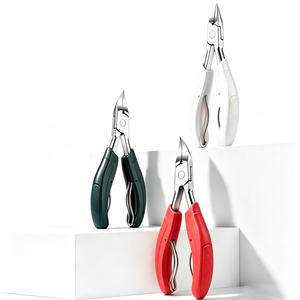
In professional clinical podiatry and medical foot care, the precision, durability, and ergonomic safety of nail nippers are non-negotiable. Podiatric professionals handle complex pathologies, including severe onychocryptosis (ingrown toenails), onychauxis (thickened nails), and onychomycosis (fungal nail infections). Standard manicuring tools fail under the mechanical loads required to clean and trim dystrophic nails. Procurement managers, medical device distributors, and private-label brands must understand the metallurgical, structural, and regulatory metrics that differentiate professional podiatry instruments from retail cosmetics.
Information Gain Insight: Genuine CE-marked podiatry nail nippers require strict adherence to EU Medical Device Regulation (MDR 2017/745) Class I diagnostic/surgical hand tools. Key manufacturing thresholds demand AISI 420 or AISI 440C martensitic stainless steel, hardened to 48–54 HRC on the Rockwell C scale, ensuring zero blade flexing under 180 N of applied hand pressure.
Metallurgy and Heat Treatment in Sialkot Manufacturing
The global hub for surgical instrument manufacturing is centered in Sialkot, Pakistan—a region renowned since the early 20th century for mastering metal smithing and medical instrument fabrication. Established in 1978, Alka Surgical & Beauty represents three generations of forging refinement, combining legacy hand-grinding artistry with modern CNC milling, laser cutting, and vacuum heat treatment.
The lifespan of a podiatry nipper depends heavily on its heat treatment protocol. Raw forging blanks of surgical stainless steel undergo controlled heating in vacuum furnaces, followed by rapid quenching and cryogenic stabilization (-80°C) to eliminate retained austenite. This prevents the cutting edges from dulling, micro-chipping, or rolling when cutting through severe keratinized tissue.
AISI 420 Medical Steel
Offers optimal ductility and high tensile strength. Ideal for heavy-duty toe nail pliers requiring high torque transmission without structural fracture.
Passivation & Corrosion
All instruments undergo chemical passivation (ASTM F86 standard) in nitric acid baths to remove free iron, ensuring complete resistance to autoclave steam sterilization cycles.
Box Joint Construction
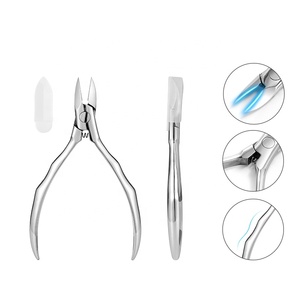
Superior to lap joints; one blade shank passes completely through the other. Maintains precise alignment of cutting edges across tens of thousands of cycles.
Technical Comparison of Podiatry Nipper Mechanisms
Selecting the correct mechanism is critical for reducing hand fatigue among podiatrists who execute hundreds of trims daily. Below is a structural evaluation matrix for B2B procurement decision-making:
| Mechanism / Type | Primary Clinical Application | Leverage Ratio | Autoclave Resistance | Ergonomic Index |
|---|---|---|---|---|
| Double-Spring Barrel Joint | Thick, Dystrophic & Fungal Nails | 4.5 : 1 (High Force) | Excellent (AISI 420) | High (Smooth Return) |
| Single-Spring Lap Joint | Standard Cuticle & Fine Nail Care | 2.8 : 1 (Medium Force) | Very High | Moderate |
| Cantilever / Compound Lever | Extreme Onychauxis & Deformed Nails | 6.2 : 1 (Maximum Torque) | Requires Grease Maintenance | Superior (Minimal Hand Strain) |
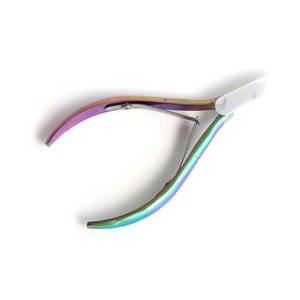
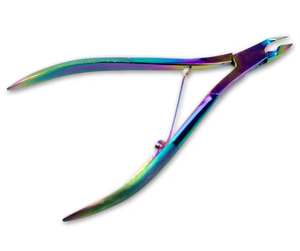
| Titanium PVD Coated | Hyper-Allergenic & High-Style Clinics | Varies by Joint | Maximum (Scratch Resistant) | High Focus |
Future Trends in Podiatry Procurement (2025–2030)
As healthcare systems tighten cross-contamination protocols and podiatry chains scale globally, procurement requirements are evolving beyond simple cost-per-unit metrics. Key emerging trends include:
1. Ergonomic Risk Reduction & Lightweight Alloys
Repetitive Strain Injuries (RSI) and Carpal Tunnel Syndrome account for significant occupational downtime among foot-care specialists. Modern manufacturers are integrating hollow-core forged handles and lightweight titanium-coated stainless composites to reduce tool mass by up to 22% while retaining crushing strength at the tip.
2. Sustainable Autoclave-Safe Physical Vapor Deposition (PVD) Coatings
Titanium Nitride (TiN) and Diamond-Like Carbon (DLC) coatings are replacing traditional electroplating. PVD coatings increase surface hardness to above 65 HRC, reduce friction at the pivot joint, and withstand thousands of 134°C autoclave sterilization cycles without flaking or discoloration.
3. Traceability, Serial Laser Etching & RFID Integration
Regulatory frameworks such as the US FDA UDI (Unique Device Identification) and EU MDR mandate full traceability for medical instruments. Leading factories in Sialkot, including Alka Surgical & Beauty, now offer micro-laser etching of batch numbers, QR codes, and custom logo branding directly onto the stainless steel shank.