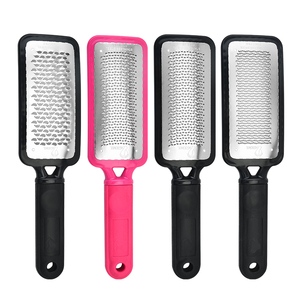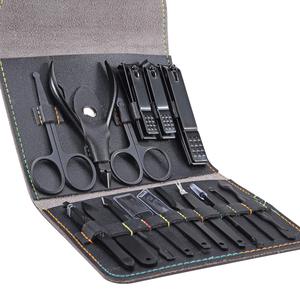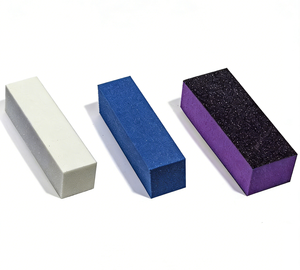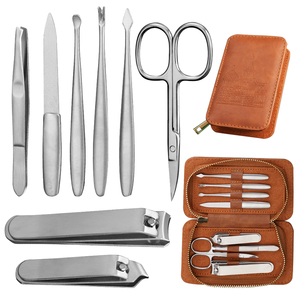
Direct OEM/ODM catalog featuring professional cutlery, surgical stainless tools, and high-performance beauty equipment engineered for commercial distributors.
Over 48 years of continuous metallurgical forging and blade shaping expertise.
Cryogenic sub-zero hardening for supreme edge retention across VG10/SG2 steel core.
Piece-by-piece optical alignment and hand Honbazuke edge honing before export.
Direct B2B supply chain fulfillment across North America, EU, and Asia-Pacific.
The commercial procurement landscape for professional chef knives has undergone a dramatic structural evolution over the past decade. Institutional B2B buyers, premium kitchenware brands, and global cutlery distributors no longer rely solely on brand prestige. Instead, modern procurement strategies prioritize micro-metallurgy metrics, verifiable Rockwell hardness (HRC) testing, carbon-to-chromium equilibrium ratios, and direct manufacturer transparency.
Japanese chef knives—reputed globally for their extreme sharpness, shallow cutting bevels (typically 12° to 15° per side), and lightweight balance—represent the apex of commercial cutlery performance. However, evaluating trusted manufacturers requires a deep technical dive into raw material sourcing, forging methods, heat-treatment protocols, and private-label OEM scalability.
Information Gain Key Takeaway: Evaluating top trusted Japanese chef knife manufacturers demands auditing five technical pillars: Core Alloy Chemistry, Heat Treatment Precision (Cryogenic Tempering), Cladding Integration, Honbazuke Hand Sharpening, and Contractual Quality Assurance Protocols.
Rooted in a decades-long legacy of metal craftsmanship since 1978, our production infrastructure bridges centuries-old hand-forging techniques with modern metallurgical precision engineering. Based in Sialkot—a globally recognized industrial center for high-grade stainless steel tools, surgical instruments, and fine cutlery—our operations operate under full authorization from the Sialkot Chamber of Commerce & Industry (SCCI) and the Federal Board of Revenue (FBR).
While traditional Japanese cutlery production is often constrained by small-scale artisanal workshop capacities and extended lead times, our hybrid manufacturing framework solves key B2B sourcing bottlenecks. By combining imported Japanese super-steels (including Takefu VG10, Takefu Super Gold 2 powder stainless steel, and Aichi AUS-10) with scalable CNC profiling, vacuum heat treatment, and traditional hand-finishing master-smiths, we provide high-volume OEM/ODM capacity without sacrificing edge integrity.
Direct sourcing of authentic Japanese raw steel bars (VG10, SG2, AUS-10) certified with full mill test certificates (MTC).
Liquid nitrogen quench treatment (-196°C) transforming retained austenite into hard martensite for maximum HRC stability.
Every batch undergoes optical laser alignment, salt spray corrosion testing, and CATRA edge-retention analysis.
Selecting the ideal blade steel for commercial inventory requires balancing edge retention, toughness (resistance to chipping), and corrosion resistance. The table below outlines the core metallurgical parameters of the primary steel grades utilized by top Japanese knife manufacturers and our OEM enterprise lines:
| Steel Grade | Carbon Content (%) | Chromium (%) | Hardness (HRC) | Edge Retention | Corrosion Resistance | Primary Commercial Use |
|---|---|---|---|---|---|---|
| VG10 (Takefu) | 0.95 - 1.05 | 14.5 - 15.5 | 60 - 62 HRC | Very High | Excellent | Premium Professional Chef Knives (Gyuto, Santoku) |
| SG2 / R2 Powder Steel | 1.25 - 1.45 | 14.0 - 16.0 | 62 - 64 HRC | Exceptional | Very High | High-End Executive & Luxury Culinary Lines |
| AUS-10 (Aichi) | 0.95 - 1.10 | 13.0 - 14.5 | 58 - 60 HRC | High | High | Commercial Kitchen & Heavy-Duty Butchery Cutlery |
| Shirogami #2 (White Steel) | 1.05 - 1.15 | < 0.20 | 61 - 63 HRC | Extremely High | Low (Requires Care) | Traditional Single-Bevel Sashimi / Yanagiba Knives |
| Aogami Super (Blue Steel) | 1.40 - 1.50 | 0.30 - 0.50 | 63 - 65 HRC | Maximum | Moderate | Artisan Master Chef Series & Specialty Cutlery |
The global culinary knife market is undergoing accelerated technological transformation driven by commercial kitchen demands, food service safety regulations, and ergonomic advancements. Sourcing directors must align their procurement roadmaps with these industry trends:
Traditional ingot steels suffer from carbide segregation during cooling, leading to non-uniform microscopic grain structures that can cause micro-chipping under high-impact cutting. Powder metallurgy (such as SG2/R2) atomizes molten steel into ultra-fine powder before hot isostatic pressing (HIP). This creates a homogeneous carbide distribution, allowing blades to reach 64 HRC while retaining remarkable toughness and ease of resharpening.
To protect hard, high-carbon core steels from lateral stress and corrosion, modern manufacturers employ San Mai (3-ply cladding) or multi-layered Damascus cladding (33-layer or 67-layer stainless cladding). The soft outer stainless steel (typically SUS410 or SUS431) acts as a shock absorber while the core steel exposes its razor-sharp edge at the cutting line.
While traditional Japanese wooden handles (Magnolia or Walnut with Buffalo Horn ferrules) remain popular for authentic aesthetic appeal, global commercial food operations increasingly mandate NSF-compliant, non-porous handles. Manufacturers are shifting toward G10 fiberglass composites, stabilized Pakkawood, and carbon fiber Wa-handles that withstand commercial dishwashing temperatures and prevent bacterial harbor points.
Procurement teams for major retail brands, commercial hotel chains, and private-label distributors face complex supply chain dynamics. Future-proofing knife sourcing requires adapting to three macro procurement trends:
Distributors are moving away from massive 5,000-piece single SKU commitments. Modern OEM factories must support modular tooling, allowing 300 to 500-unit custom brand runs.
Buyers expect digital batch certificates verifying Rockwell C hardness readings, spectral analysis of steel composition, and LFGB / FDA food contact safety compliance.
Turnkey private label packages—including custom laser blade etching, magnetic gift boxes, sheath customization, and branded wooden cases—are now essential B2B expectations.
Essential guidance for commercial cutlery buyers, importers, and brand managers evaluating OEM manufacturing partnerships.
Authentic Japanese chef knife manufacturing relies on specialized core-cladding geometry (such as San Mai), extreme heat treatment targets (60–64 HRC vs 54–56 HRC in Western knives), and asymmetrical or acute edge bevels (12–15 degrees). Japanese blades focus on extreme edge geometry and effortless slicing precision, whereas generic Western knives prioritize thick spine stability and impact resistance at the expense of cutting finesse.
Yes. We offer complete OEM/ODM solutions. Brand owners can specify steel core grades (VG10, SG2, AUS-10), Damascus layer patterns, handle geometry (Octagonal Wa-handle, D-shape, or Western full-tang), handle materials (Pakkawood, G10, Micarta, Ebony), laser-etched or stamped logos, custom bolster styling, and customized retail gift box packaging.
Our standard production MOQ for custom private-label chef knives starts at 300 to 500 pieces per SKU, depending on steel availability and handle complexity. For standard catalog models with custom laser etching, lower sample evaluation batches can be arranged prior to full container production rollout.
Every manufacturing batch undergoes structured quality assurance: Rockwell C hardness testing (HRC verification), optical digital microscopic inspection of blade grind and tip symmetry, salt-spray corrosion resistance evaluation, and cutting-edge sharpness testing. Batch test documentation is provided with every shipment.
Our manufacturing and export headquarters are located in Sialkot, Punjab, Pakistan—the internationally renowned cluster for surgical, beauty, and precision cutlery manufacturing. We operate under full legal authorization registered with the Sialkot Chamber of Commerce & Industry (SCCI) and the Federal Board of Revenue (FBR), adhering to ISO-aligned quality management systems.
Partner directly with a trusted manufacturer offering verified metallurgical standards, rapid OEM sampling, and scalable factory pricing for global distributors.