
Explore our top-tier export items manufactured to rigorous international standards, fully customizable for OEM/ODM private label programs across Australia.
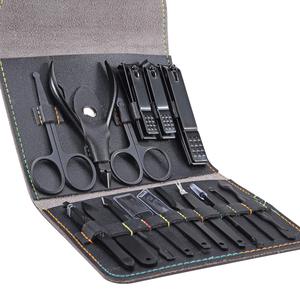
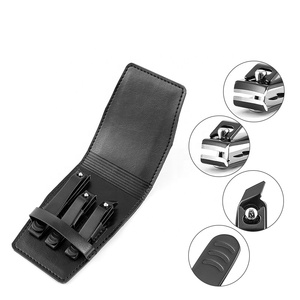
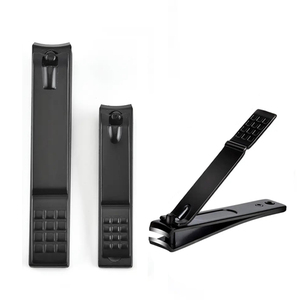
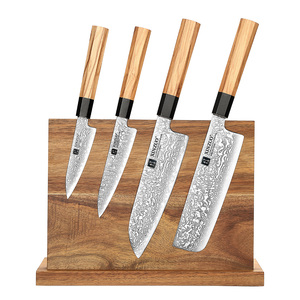
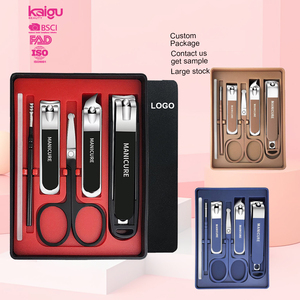
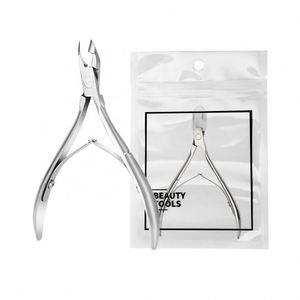
Australia’s red meat processing sector is globally renowned for its stringent standards in carcass yield optimization, food safety, and hygiene. From high-throughput beef export abattoirs across Queensland and New South Wales to artisanal butcheries in Melbourne and Sydney, the operational efficiency of boning lines depends heavily on blade sharpness, ergonomic comfort, and edge retention. As labor costs rise across Australian meat processing facilities, commercial procurement managers are increasingly turning to top-tier Chinese knife manufacturers and exporters to secure high-performance boning knife sets at scalable factory-direct price points.
Modern Chinese cutlery manufacturing has undergone a massive technological upgrade over the past decade. Advanced OEMs leverage computerized cryogenic heat treatment, robotic convex edge grinding, and high-purity German alloy steel (such as 1.4116 DIN / 5Cr15MoV) alongside premium high-carbon Japanese steel formulations. This ensures that China-manufactured boning knife sets match or exceed traditional European brands in flex performance, wear resistance, and sanitation compliance while reducing procurement overhead by 35% to 50%.
Executive Procurement Note: Sourcing boning knife sets under the China-Australia Free Trade Agreement (ChAFTA) allows qualified Australian commercial buyers to leverage zero or reduced tariff rates, streamlining land costs at major logistics hubs such as Sydney (Port Botany), Melbourne, Brisbane, and Fremantle.
Boning knives are specialized cutting instruments subjected to constant lateral stress, bone contact, and corrosive organic liquids. When evaluating China boning knife factories for the Australian market, technical directors must look beyond surface aesthetics and evaluate fundamental metallurgical properties:
High-grade 5Cr15MoV, 7Cr17MoV, and X50CrMoV15 stainless steel alloys provide optimal micro-structure density. Molybdenum additions bolster corrosion resistance against animal fats, while Vanadium refines grain structure for razor-sharp edge restoration.
Blades are heat-treated in vacuum furnaces followed by liquid nitrogen sub-zero quench (-196°C). This process transforms retained austenite into martensite, achieving an ideal Rockwell hardness of HRC 56-58 without making the steel brittle.
Handles constructed from textured Polypropylene (PP), Thermoplastic Rubber (TPE), or G10 fiberglass composites are seamless-injection molded directly onto full-tang or rat-tail steel tangs to prevent moisture or bacterial ingress.
Australian meat carvers and industrial boners select knife geometry depending on the specific species and primal cut being processed. The matrix below outlines the primary structural profiles produced by leading Chinese exporters serving the Australian market:
| Blade Profile Type | Typical Length | Flexibility Rating | Primary Australian Application | HACCP Color Coding |
|---|---|---|---|---|
| Curved Flexible Boning Blade | 15cm (6 in) | High Flex | Poultry deboning, delicate fish filleting, skinning lamb shoulders | Yellow / White |
| Semi-Flexible Narrow Blade | 15cm - 18cm | Medium Flex | Trimming beef briskets, pork loins, silver skin removal | Red / Blue |
| Stiff Straight Boning Blade | 13cm - 15cm | Rigid / Zero Flex | Breakdown of heavy beef primals, bone jointing, carcass splitting | Red / Black |
| Narrow Breaking Knife | 20cm - 25cm | Rigid | Portioning steaks, cutting through thick carcass sections | Red / Green |
Understanding regional Australian commercial requirements allows Chinese factories to customize handle ergonomics, blade flex profiles, and packaging layouts for localized buyer personas:
Industrial slaughterhouses in Rockhampton, Toowoomba, and Wagga Wagga operate continuous boning chains processing thousands of beef sides daily. Knives used here require slip-resistant safety guards, color-coded handles for food hygiene compliance, and high fatigue resistance to endure repeated steeling during 8-hour shifts.
Artisanal meat shops across Melbourne, Adelaide, and regional Victoria emphasize refined cutting precision, whole-animal utilization, and customer-facing craftsmanship. These buyers prefer premium Damascus steel or high-polished mirror-finish boning knife sets with ergonomic Pakkawood or G10 handles presented in custom gift boxes.
Outback cattle stations in Northern Territory and Western Australia require heavy-duty boning knife sets equipped with protective heavy-canvas roll bags or molded sheath holders. Durability, ease of field sharpening with portable diamond steels, and corrosion immunity are paramount.
Australia’s booming Low & Slow BBQ culture and premium steakhouse hospitality sector demand ultra-sharp boning and brisket trimming sets. Flexible boning knives designed to seamlessly contour around rib cages and trim fat caps to exact millimeter specs are highly sought after by commercial chefs.
As Australian buyers optimize their procurement strategies, Chinese knife manufacturers are adapting to meet evolving regulatory and commercial expectations:
Building upon decades of precision metalworking experience, our manufacturing facilities integrate traditional blade hand-finishing with automated CNC grinding and vacuum heat treatment. Originally established in classic cutlery crafting traditions, our enterprise combines historical metallurgical mastery with modern quality management systems. Every boning knife set exported to Australia undergoes rigorous 100% piece-by-piece testing for hardness verification, sharpness angle testing (BESS scale), and joint sealing integrity.
Partner directly with China's leading commercial cutlery exporter serving Australian importers, distributors, and processing facilities. Fast OEM prototyping available.
Clear answers to common questions regarding compliance, MOQ, steel selection, and customs documentation.