Executive Whitepaper: Industrial Wood Rasp Metallurgical Standards for Seattle Importers
As a premier China wood rasps hand tools manufacturer and exporter directly serving the Seattle B2B market, our engineering framework merges heritage steel forging with advanced micro-stitch tooth placement. Designed specifically for the Pacific Northwest’s distinctive timber varieties and demanding marine craft applications.
Selecting high-performance industrial hand rasps and cabinet files requires a deep understanding of metallurgy, tooth stitching geometry, and chip-clearance dynamics. For commercial buyers, tool distributors, timber architectural firms, and marine refurbishers in Greater Seattle—spanning from the maritime hubs of Ballard and Lake Union to Bellevue’s luxury cabinetry studios—securing factory-direct supply lines from an established manufacturer ensures unmatched cost efficiency without sacrificing edge longevity.
Our manufacturing facility, operating continuously since 1978, leverages proprietary heat-treatment cycles and high-carbon alloy steel billets (such as T12, SK2, and 65Mn spring steel). This process guarantees that every wood rasp, cabinet file, riffler, and specialty shaping tool maintains an optimal core toughness while achieving a tooth edge hardness between 62 HRC and 65 HRC. Whether processing dense local hardwoods like Bigleaf Maple and Pacific Madrone or working softwoods such as Douglas Fir and Western Red Cedar, our tools provide crisp, grain-free stock removal and superior resistance to tooth loading.
Localized Application Scenarios in the Pacific Northwest (Seattle Regional Market)
Seattle's woodworking ecosystem is structurally unique. Our specialized hand rasps are tailored to meet the exact operational demands of Washington State’s core craft sectors.
1. Pacific Northwest Maritime & Boat Building
Centering around Seattle’s historic shipyards in Ballard, Lake Union, and Bainbridge Island, master shipwrights demand heavy-duty half-round rasps and cabinet files capable of rapidly shaping marine Teak, White Oak, and resin-impregnated spars. Our rust-passivated rasps deliver smooth stock reduction without tearing grain during custom hull fittings.
2. Architectural Timber Framing & Joinery
Commercial and high-end residential timber construction across Bellevue, Redmond, and Puget Sound heavily utilizes massive Glue-Laminated (Glulam) timber beams and heavy Douglas Fir trusses. Our coarse-cut hand rasps and rough-stitch flat rasps allow timber framers to quickly fine-tune mortise-and-tenon joints and chamfer structural edges.
3. Artisan Lutherie & Musical Instrument Crafting
Seattle is home to world-renowned custom acoustic and electric guitar builders. Luthier hand-shaping requires ultra-fine riffler rasps and needle files for sculpting neck profiles, headstocks, and delicate bracing inside soundboxes. Our hand-punched random tooth distribution eliminates chatter marks on figure-grained tonewoods.
4. Eco-Furniture & Reclaimed Wood Sculpting
Matching Washington’s aggressive sustainability mandates, Seattle woodworking studios focus on live-edge slab furniture and urban timber reclamation. Our heavy-duty wood rasps cut effortlessly through abrasive, weathered surface layers, pitch-heavy knot clusters, and dense urban salvage woods without premature tooth dulness.
Macro Trends & Technical Demands Shaping Seattle’s Tool Procurement
B2B procurement professionals in King County and the broader Pacific Northwest are adapting to key industry shifts that directly impact hand tool specifications.
1. Shift Toward Hybrid Resin & Wood Slabs
The explosive popularity of epoxy-resin river tables and composite wood furnishings in modern Seattle architectural interiors demands hand rasps that cut cleanly through both organic timber fibers and synthetic polymers. Our dual-purpose grain patterns ensure uniform tooth engagement across dissimilar materials without clogging or resin melting.
2. High Humidity & Maritime Corrosion Resistance
Seattle’s coastal climate presents continuous atmospheric humidity challenges for hand tool storage. Modern tool distributors require black-phosphate conversion coatings, electroless nickel plating, or specialized vapor-corrosion inhibiting packaging for imported steel hand tools to prevent shelf rusting during transit and storage.
3. Growth of Boutique OEM Brands & Private Labeling
Seattle hardware retailers and North American ecommerce tool brands are increasingly seeking factory-direct OEM custom manufacturing. By customizing handle ergonomics (burnt oak, resin, or non-slip rubber), laser-etching brand logos, and designing retail packaging in-house, distributors achieve superior market positioning.
Wood Rasp Specification & Selection Benchmark Matrix
A comprehensive reference table engineered for Seattle hardware buyers, tool crib managers, and industrial procurement agents.
| Rasp Style / Classification |
Tooth Pattern & Density |
Hardness Rating |
Primary Application Scenario |
Pacific Northwest Wood Compatibility |
| Half-Round Cabinet Rasp |
Stitch Cut 3–5 (Coarse to Medium) |
62 – 64 HRC |
Rapid shaping of curved cabinetry legs, boat spars, and handrails. |
Douglas Fir, Western Red Cedar, Alder |
| Flat Hand Bastard Rasp |
Stitch Cut 1–2 (Rough / Heavy Stock) |
63 – 65 HRC |
Heavy material removal, timber beam end-grain leveling. |
Reclaimed Barnwood, White Oak, Maple |
| Needle & Riffler Rasps |
Stitch Cut 8–10 (Ultra-Fine Precision) |
60 – 62 HRC |
Luthier guitar necks, delicate wood carving, tight concave contours. |
Sitka Spruce, Walnut, Ebony, Rosewood |
| Patternmaker’s Rasp |
Hand-Stitched Micro-Grain (Staggered) |
62 – 64 HRC |
Smooth architectural molding models, custom gunstocks, sculpture. |
Pacific Madrone, Birch, Cherry |
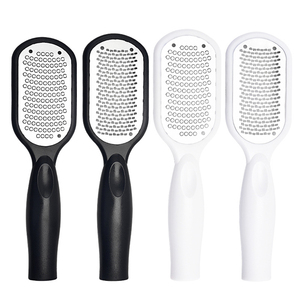
| Callus & Utility Grater Rasps |
Precision Micro-Punched Blades |
SUS 420 / 304 Stainless |
Pedicure callus care, specialized synthetic material smoothing. |
Non-wood / Synthetic / Personal Care |
Our Manufacturing Precision: Sialkot Heritage Meets Modern OEM Capacity
Combining over four decades of metallurgical mastery with strict factory-direct quality control systems.
Our enterprise history is rooted in a tradition of precision steel working established in 1978. Operating out of Sialkot—a globally renowned hub for surgical-grade instruments, cutlery, and high-precision cutting hand tools—our company applies rigorous surgical manufacturing tolerances directly to our woodworking hand tool lines. This rare cross-industry expertise guarantees exceptionally balanced tools, distortion-free steel blades, and pristine surface finishing.
We operate as a legally registered manufacturer under official industry authorizations, maintaining strict compliance with international manufacturing and export protocols. Every batch of wood rasps destined for Seattle undergoes a systematic 6-stage quality assurance protocol:
STAGE 01
Steel Billet Spectrometry
Chemical composition analysis of incoming carbon steel batches to verify carbon content (0.95%–1.2%) and alloy consistency before drop forging.
STAGE 02
Precision Drop Forging
Die-forging blanks to exact dimensional tolerances, establishing robust tangs and uniform blade profiles capable of withstanding heavy impact.
STAGE 03
CNC & Hand Tooth Stitching
Combining automated machine stitching for uniform utility rasps with master-craftsman hand stitching for patternmaker and luthier rasps.
STAGE 04
Salt-Bath Heat Treatment
Computerized salt-bath hardening followed by double tempering to lock in 62-65 HRC hardness while eliminating internal brittleness.
STAGE 05
Anti-Corrosion Passivation
Application of protective oil, electro-blackening, or chrome coating designed to withstand humid Pacific Northwest maritime transit.
STAGE 06
100% Tactile Edge Inspection
Every single rasp blade is manually tested on test wood specimens for teeth sharpness, chip clearance, joint stability, and handle pull-off force.
Frequently Asked Questions by Seattle & US West Coast Procurement Managers
Direct answers addressing intent, import logistics, custom branding, and technical specifications.
How do your Chinese-manufactured wood rasps perform on soft, pitch-heavy Pacific Northwest woods like Douglas Fir?
+
Pacific Northwest softwoods like Douglas Fir and Western Red Cedar contain high resin pockets and soft springwood rings that easily clog standard machine-cut files. Our rasps designed for the Seattle market feature optimized rake angles (12° to 15°) and open, hand-stitched tooth patterns that create larger gullets between teeth. This geometry allows wood chips and pitch to eject naturally during stroke motion, preventing tooth loading and ensuring smooth cutting without tearing soft fibers.
What are the lead times and shipping logistics for freight shipments delivering to the Port of Seattle?
+
We provide comprehensive export handling for Seattle B2B importers under FOB, CIF, or DDP terms. Ocean freight shipping directly from China to the Port of Seattle (or Tacoma) typically takes between 14 to 20 transit days. Standard OEM production lead times range from 25 to 35 days depending on batch customization. For urgent distributor restocking, air freight via Seattle-Tacoma International Airport (SEA) can be arranged within 5 to 7 operational days.
Can we request custom handle designs, laser-etched branding, and custom retail packaging for North American hardware brands?
+
Yes. OEM and private-label customization is a cornerstone of our enterprise operations. We supply Seattle hardware brands, tool catalog distributors, and retail chains with complete customization services: laser-etching your brand logo onto the steel tang, molding custom ergonomic rubberized grips or burnt oak handles, and producing custom hang-cards, wooden presentation boxes, or heavy-duty canvas roll pouches ready for retail shelving.
How does your factory-direct wholesale pricing compare against European hand-cut rasps?
+
European hand-cut rasps often carry exorbitant price tags due to high labor overheads. By combining advanced metallurgical tooling, highly skilled forging traditions since 1978, and factory-direct export economics, our manufacturing facility delivers equivalent tooth sharpness, steel hardness (62-65 HRC), and structural durability at approximately 40% to 60% lower unit costs. This provides Seattle importers with significantly healthier profit margins.
What minimum order quantities (MOQs) apply for wholesale and private label orders?
+
For standard production runs of existing wood rasp models, our standard MOQ is typically 500 units per article number. For customized OEM private label orders (featuring custom branded handles, laser logo etching, or unique tooth specifications), our MOQ starts at 1,000 units. Pre-production sample sets are provided for physical testing and approval prior to full container or batch production.
Partner with China's Premier Wood Rasp & Hand Tool Manufacturer Serving Seattle
Expand your product catalog with industrial-grade wood rasps, custom cabinet files, and specialized cutting tools. Direct factory pricing, ISO-aligned quality control, and fast West Coast logistics support.
Send an Inquiry